Natural size. The model is separated into 10 parts: the base of the head, cranium, eye, falx cerebri, right half of the brain, left half of the brain (4), and...
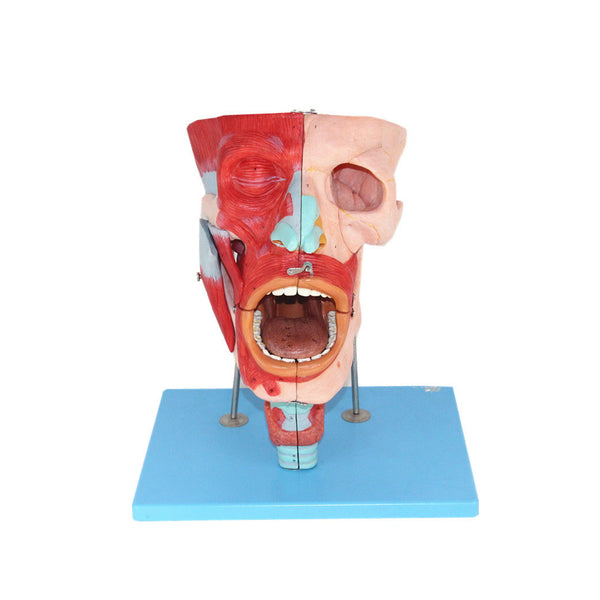
Enlarged approx. 2 times. The model is separated into 10 parts. Upper part: left side bones of the skull, right side mimic muscles, median section through the nasal cavity, upper...
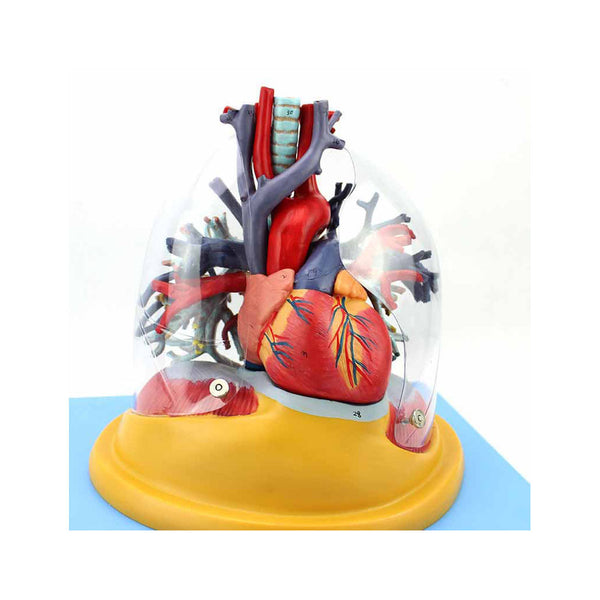
The model shows in 2/3 natural size the tracheobronchial system, the heart, the major vessels, and the pulmonary vessels extending to subsegmental divisions. The model can be separated into 4...
This stomach model is designed to be used as a visual learning aid for teaching of physiology of the human stomach, and its anatomical morphology. • This model shows the...
This 2-part model, 1.5X life-size, shows the human kidney in the frontal region. Internal structures are clearly revealed, including cortex, medulla, pyramids, calyces, renal pelvis (partially opened), ureter, and origins...
▪ This model, composed of 7 parts, is 4X life size. ▪ It consists of 3 teeth, seated in their sockets, that shows the progressive deterioration of tooth structure by dental caries....
This is an excellent educational tool for studying common prostate pathologies. The model consists of three prostate sections, including the rectum and urinary bladder. The first model shows the internal...
This enlarged male urinary bladder model is designed as a visual learning aid for urology, anatomy and physiology courses or for display in medical offices. • Shows the male urinary bladder...
This 300X life-size model consists of 2 renal corpuscle sections: the first one shows theanatomy of the healthy glomerulus, the second one describes the most important glomerular pathologies due to...